
UK Games Expo AI policy: prepare an artwork provenance packet
Read the UK Games Expo AI policy and prepare an asset-level artwork comparison, process record and specific question for uncertain cases.
Sources checked:
Prepared with AI assistance and reviewed against linked sources. Asset examples and the unsent request are illustrative; the suggested packet is not an official UKGE process.
On this page
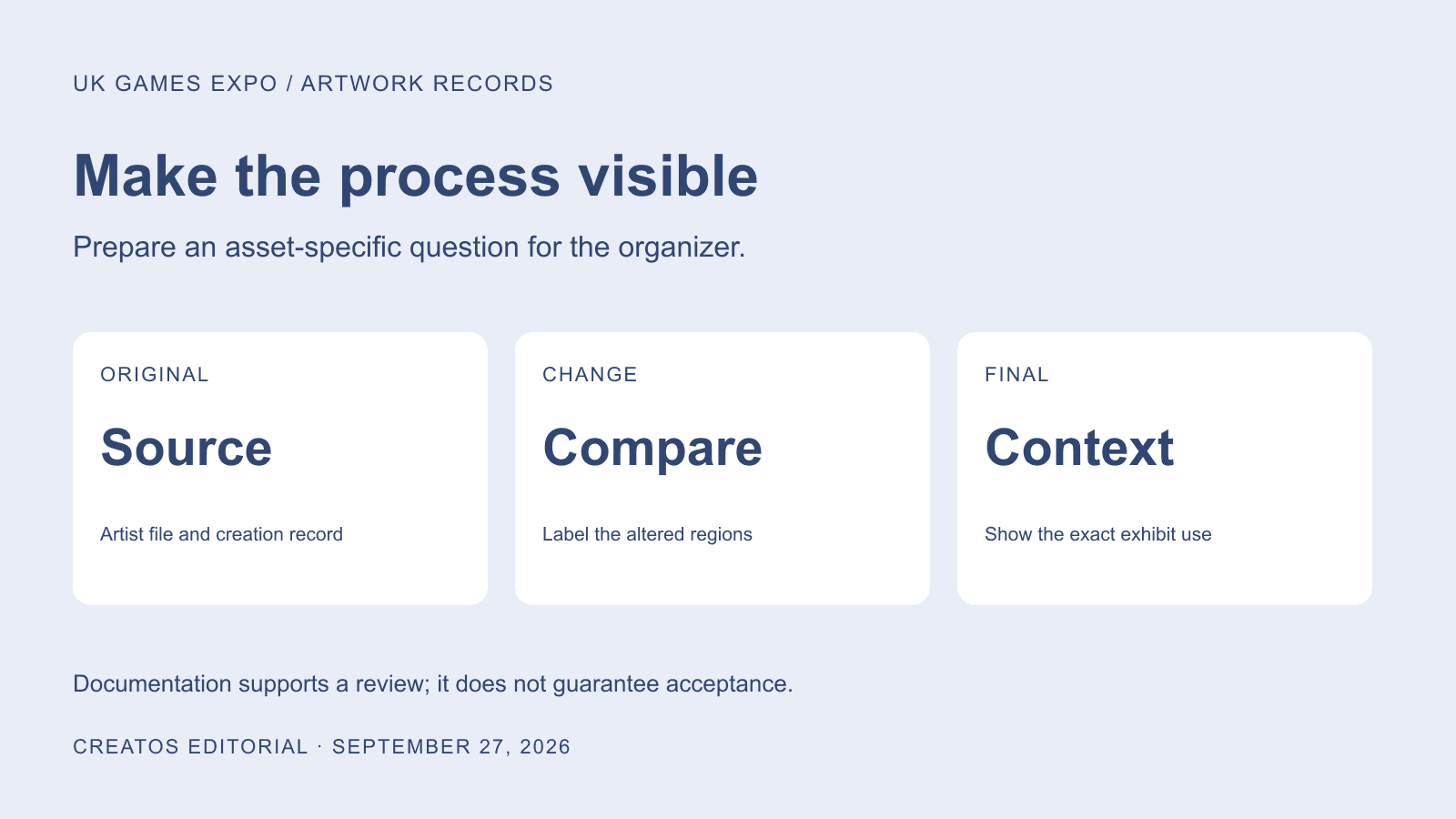
UK Games Expo's AI policy raises a question for exhibitors: what should an artwork query include when the finished image does not reveal how it was made? Prepare the original, identify exactly what changed, and show where the final asset will appear. A general statement that a game is "mostly human-made" gives an organizer much less to assess.
What the published policy says
The official UKGE policy prohibits products created wholly or to a significant extent with AI. It covers items exhibited or displayed as well as those sold, including game artwork and text, accessories, clothing and books.
The page allows room for computerized spell checking, minor editing, production assistance and accessibility tools while requiring humans to carry out the central creative process. It does not give an allowed percentage of AI material. Organizers may require removal of prohibited items and take further action if an exhibitor refuses.
The site currently advertises the June 4 to 6, 2027 event. The policy page itself has no publication date, so this article does not assign one to it.
In a public board-games discussion, u/vinceherman asked where the boundary would fall and how it would be enforced. The official wording answers some of that question, but it does not resolve every possible editing process.
Start with an asset list, not a verdict on the whole game
Review each distinct asset before asking about the finished product. The following entries are fictional examples, not decisions made by UKGE:
| Asset | Process to document | Question to resolve |
|---|---|---|
| card-fox-v3.png | Artist's sketch, layered painting and final export | Can the team produce the actual creation record if asked? |
| card-forest-v2.png | Human illustration with a generated replacement background | How does the organizer assess this exact replacement under its rule? |
| rulebook-v5.pdf | Human-written text with recorded spelling corrections | Does the submitted file match the described editing process? |
The generated-background case needs a specific answer. A small region can carry a large part of an image's creative content; measuring pixels alone cannot supply a policy threshold that the organizer has not published.
Use the list to find gaps in your own records. If the artist supplied only a flattened final image, ask for an accurate account of the process and whatever supporting files they can legitimately provide. Do not reconstruct a fictional sequence of sketches to fill the gap.
Build one comparison page for the uncertain asset
For card-forest-v2.png, our proposed packet would contain:
- The original human-created illustration, labeled with its actual filename and creator.
- The final version beside it, at the same scale, with the replaced region outlined.
- A short process note naming the tool and describing what it generated or altered.
- The intended use: card face, box, rulebook, stand display or another precise location.
- Links to the retained source files and any relevant artist agreement or permission records.
Keep originals separate from annotated copies. A comparison page should make the change easy to inspect without altering the underlying evidence. If a source file cannot be shared publicly, state that it is available through an appropriate private review route rather than publishing it without permission.
Ask about the actual material
A specific query might read:
We plan to display card-forest-v2.png on a game card at UK Games Expo. The attached comparison shows the artist's original illustration and the final export. A generative tool replaced the background region outlined in blue; the character and foreground remain from the original. Can you confirm how the AI policy applies to this asset and whether it may be displayed? Please tell us if you need the source file or a more detailed process account.
This is an original sample request. It has not been sent to UKGE, and it is not an approval. Replace every process detail with what actually happened. Retain the organizer's response with the exact version submitted; a later redesign may need a new question.
Use a visual board to make the comparison readable
Creatos's flow editor can group imported images with text notes and export a PNG. Use those groups to place the original, final image and process explanation together. Keep the underlying artwork and agreements in their original files; the exported board is a readable overview.
This packet is a suggested preparation aid, not an official UKGE submission format or a certificate of compliance. Check the organizer's current instructions before relying on an earlier answer, and resolve unclear assets before committing them to the exhibition.
Sources
- UK Games Expo AI policy
- Discussion of the UK Games Expo AI policy · u/vinceherman (comment)
- Creatos flow editor
Continue reading
Browse all posts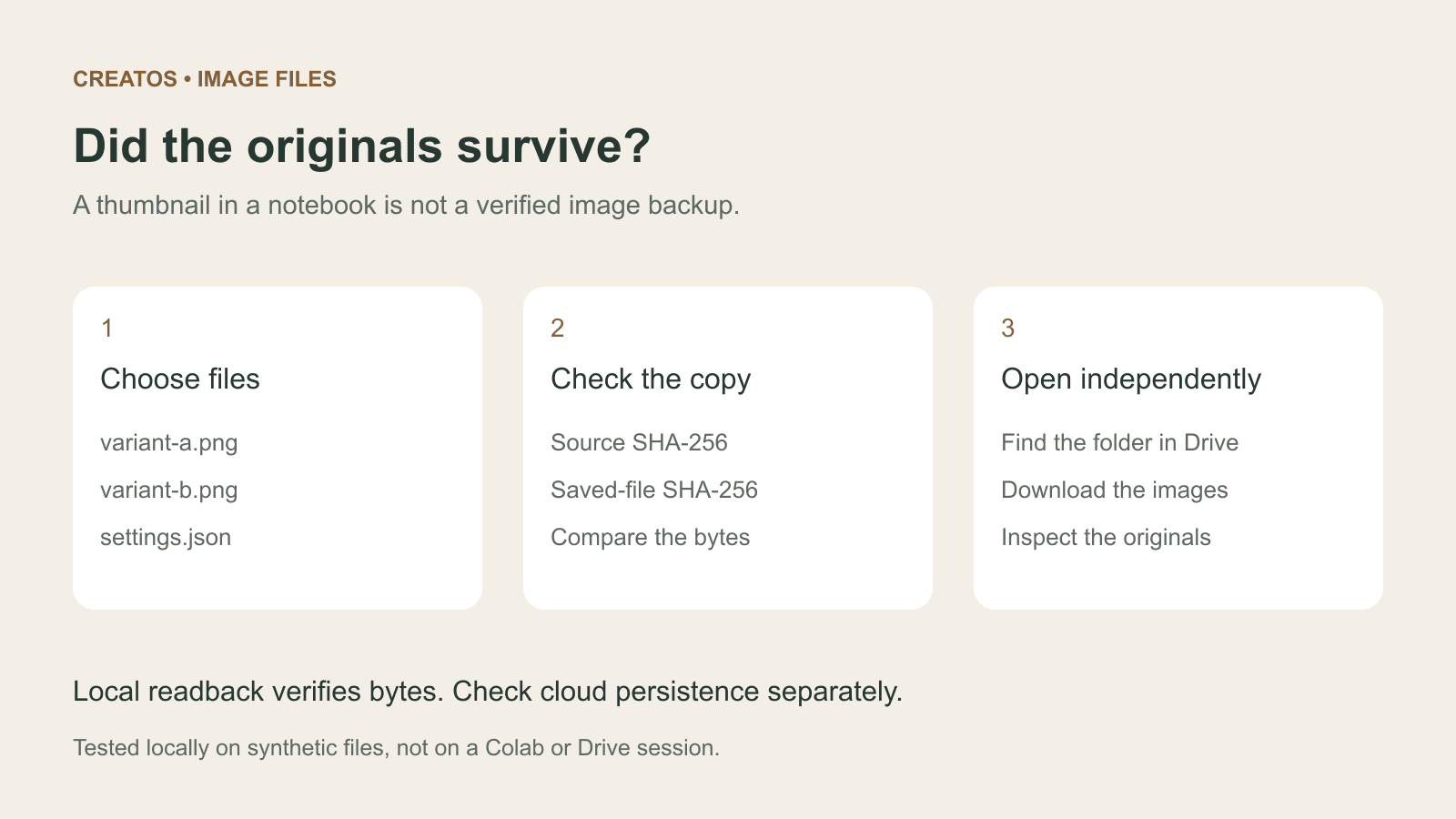
Save Colab images before a runtime reset: verify the copy
Keep generated PNGs and settings outside the Colab runtime. Use a locally tested copy-and-hash helper, then check the files independently in Drive.

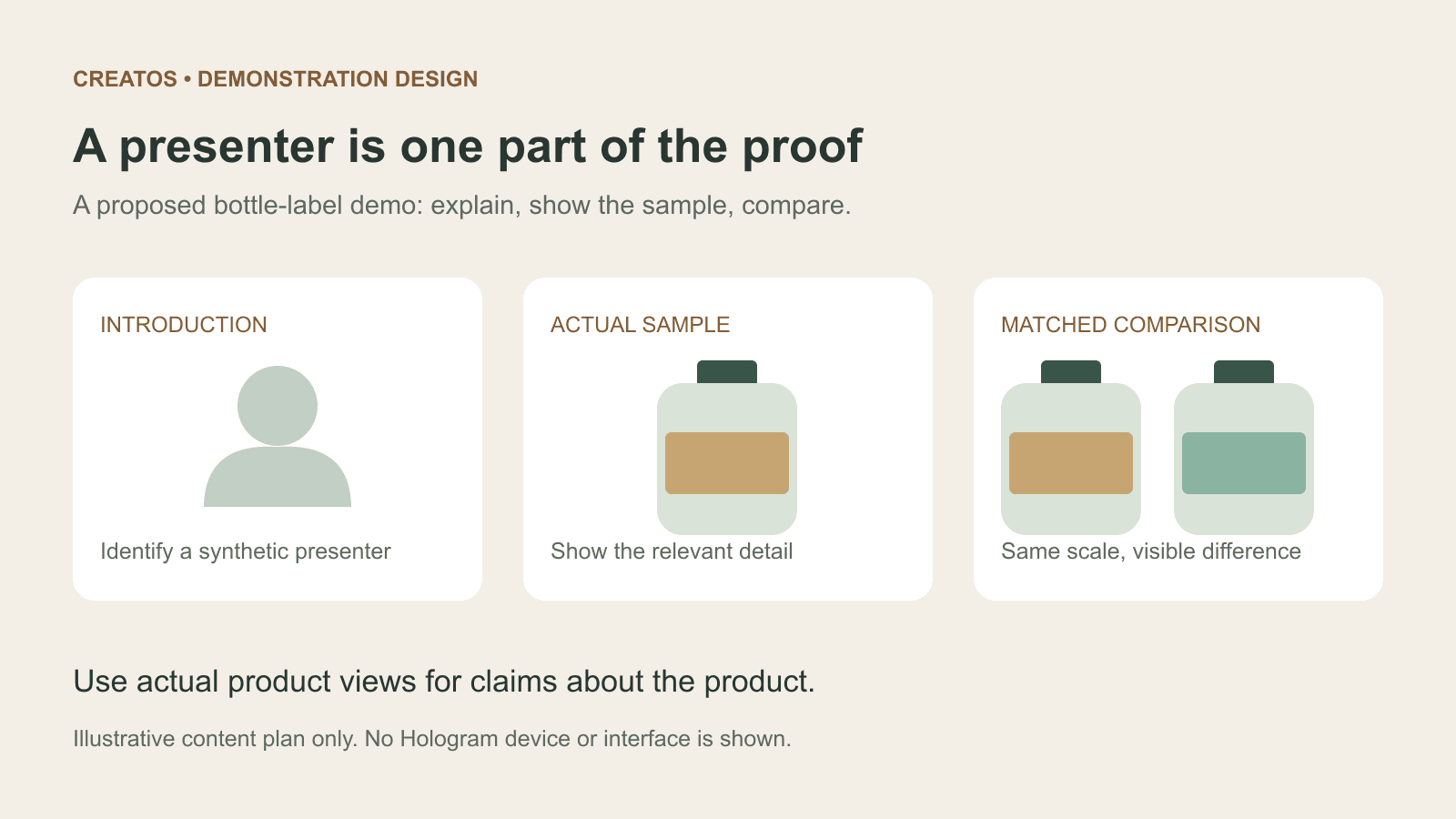
Meta Hologram vs a live camera in product demos
Separate an AI presenter from evidence of a product. A proposed 35-second label demo shows when to use actual photos, screen recordings and captions.
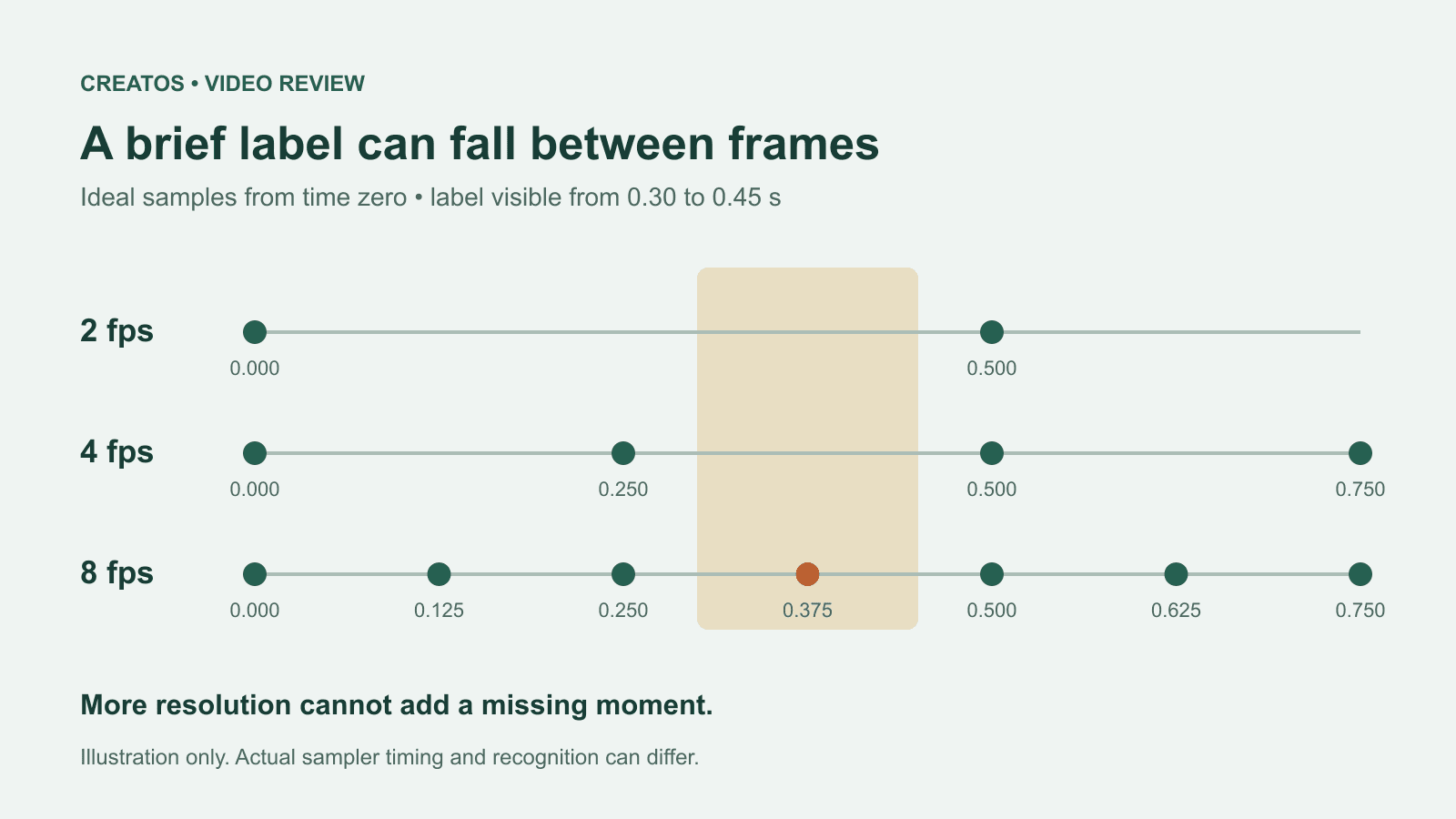
MiMo video review: why short details disappear
A worked sampling example shows why MiMo can miss a brief label, how fps differs from resolution, and what to check before approving a product video.