
GPT-6 Astra prompting: three task briefs to try
Three original GPT-6 Astra prompt examples for research, editing, and website work, with a practical way to check the results.


Sources checked:
Prepared with AI assistance and checked against the linked documentation. The example prompts have not been benchmarked.
On this page
Tell GPT-6 Astra what to deliver, which decisions it can make, and how you will check the result. The three briefs below show how to do that for research, editing, and a small website change.
OpenAI's current Astra guide describes a model that may ask more clarifying questions, respond strongly to instructions in skills and project files, and produce detailed formatting. The guide recommends making autonomy, writing style, and verification expectations explicit.
We wrote these example briefs for you to adapt. We haven't benchmarked them against shorter prompts or established that they improve Astra's performance in your application.
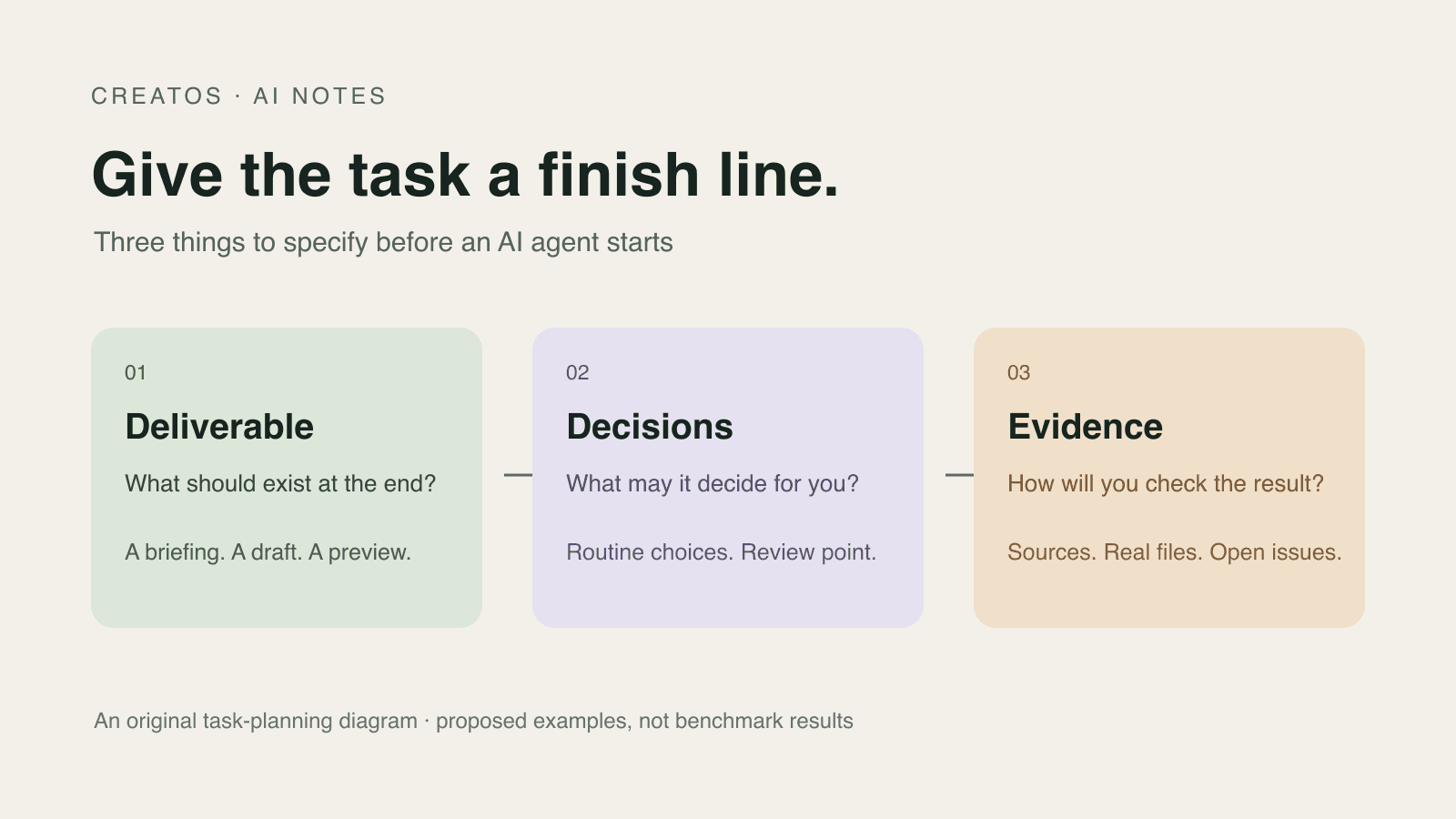
Our diagram summarizes the structure used in these examples. It describes the proposed briefs, not measured model performance.
Research: define the audience and the question
“Research this new model” leaves the audience and purpose open. Someone preparing a presentation needs a different answer from someone choosing an API.
Try this when you need to explain a model announcement:
Prepare a briefing for a designer who needs to explain this model announcement to colleagues tomorrow.

Use the announcement and current product documentation. Identify the changes that affect a designer's work, and link each factual claim to its source. Separate available features from announced plans.

Deliver a one-page explanation and a comparison table. If two sources disagree, show the conflict and the date of each source. Make reasonable choices about layout and wording. Ask me only if the intended audience or a missing required source would change the answer.

End with the questions the evidence cannot yet answer. Do not invent a test result to fill a gap.
Before running it, supply the model name and the announcement URL. If you already know the use case, replace “a designer's work” with it. A brief about illustration editing, for example, should identify the relevant editing controls rather than describe every capability the vendor lists.
Writing: describe what the reader needs
An instruction to make text “sound human” should also say what must survive the edit. Supply the draft and identify its audience:
Edit this explanation for a reader who uses AI tools but does not develop software.

Put the practical answer in the opening paragraph. Keep the original names, numbers, source links, direct quotations, and qualifications. Replace broad praise with the specific fact that supports it. Remove repetition, and explain a technical term when the reader needs it to follow the argument.

Return the complete edited article. Separately list any factual gap you could not resolve from the supplied material. Do not add personal experiences or imply that we tested the product.
Give it one paragraph of your own writing if you want it to match an established voice. Then check the result against the source draft. In particular, look for a qualification that disappeared: “available to selected accounts,” for instance, should not become “available.”
A website change: define the stopping point
For an agent that can edit files or use a browser, “finish the change” also needs a stopping point. In this local website brief, that's a working preview:
Add the supplied article to this site's existing blog template in a separate working branch.

Reuse the existing styles and image components. You may fix formatting and broken local links in this article. Show me a complete local preview with the actual images and a short explanation of any unresolved issue.

Check that the article renders, that its links work, and that the phone layout is readable. Keep these checks focused on this change. Report which checks you actually completed.

The stopping point is a working preview ready for review. Wait for my approval before publishing it to the public site.
Adapt the last paragraph to the authority you actually intend to grant. A prompt should not be used to bypass an account's permissions or an application's controls.
Check a brief with one representative task
Save the starting prompt and the result. On the next comparable attempt, change one instruction so you can identify what helped. Use the same source material when comparing a research or writing brief.
| Check | What to inspect |
|---|---|
| Completion | Did it deliver the requested artifact, or only describe a plan? |
| Fidelity | Do the facts, quotations, and qualifications match the sources? |
| Independence | Did it make the routine choices you had already authorized? |
| Boundary | Did it stop at the review or publishing point you specified? |
If the agent still pauses unexpectedly, ask it to identify the instruction that led to the pause. OpenAI's guide points to conflicting guidance in skills and project files as one possible cause. Inspect the explanation before adding more instructions; a missing account permission needs a different fix from an unclear writing brief.
Start with the example closest to your work. Replace its audience, input, and deliverable, then judge the resulting artifact against those requirements.
Sources
- OpenAI: Model guidance — GPT-6 Astra · OpenAI